The Esthetician Who Stopped Recommending Retinol to Half Her Clients (And What She Started Using Instead)


Redness. Peeling. Skin so raw you skip makeup and skip plans.
If retinol did this to you, you did nothing wrong.
For years, dermatologists and estheticians called retinol the gold standard. Prescribed it to nearly everyone. Told clients to push through the “purge.”
But an esthetician who spent over a decade watching clients suffer through that purge started noticing something: some skin was never going to tolerate it, no matter how carefully it was used.
What she found instead isn’t a milder version of retinol, trying to do the same thing more gently. It works on a completely different principle. It’s something your skin has been making on its own since before you were born, in smaller and smaller amounts every year.
Six years of watching the same thing happen
Six years ago, I was still telling almost every client the same thing: start with retinol, go slow, push through the first few weeks.
Some did fine. A lot didn’t. I watched women who did everything by the book, patch tests, buffering, the sandwich method, still end up in my chair with a wrecked barrier and skin that looked worse than before we started.
I tried the usual next steps. Lower percentages. Encapsulated formulas. Bakuchiol, the “gentle alternative” every other esthetician was recommending. Some clients tolerated it fine. Almost none got real results from it.
One client stuck with me. She’d tried three different retinol formulations over two years, patch-tested every one, reacted every time. She asked me a question I didn’t have a good answer for:
That question sent me back into dermatology journals instead of product marketing. That’s where I found it.

Why retinol works, and why it doesn't work for everyone
Retinol earned its gold-standard reputation honestly. For a lot of skin, it delivers results nothing else has matched. But that same mechanism that makes it work is what makes it a gamble for the skin it doesn’t work for.
Retinol works by forcing your skin into overdrive. It speeds up cell turnover, faster shedding, faster rebuilding, which is exactly what makes it effective, and exactly what makes it a gamble for the skin that can’t keep up.
Here’s what most people never get told: this isn’t about doing it wrong. Research points to real differences in baseline skin microbiome that may predispose some people to retinol irritation before they ever open the bottle[1] — differences that show up before the first application, not because of misuse.
Some skin was never going to tolerate forced turnover. No amount of patch-testing changes that. The damage isn’t a sign you did something wrong. It’s the mechanism working exactly as designed, on skin it was never built for.
A signal, not a peel
There’s a copper-binding peptide called GHK-Cu, first identified in human plasma back in 1973. It’s not a new ingredient chasing a trend, it’s something your body has been producing on its own your whole life. You just make less of it every year, levels drop by roughly 60% between your 20s and 60s[2].
Instead of forcing your skin to shed and rebuild, GHK-Cu acts more like a signal. Research on human fibroblasts, the cells responsible for producing collagen, shows it stimulates those cells directly, increasing collagen and elastin production without forcing the turnover retinol depends on.
Figures reflect published research on the GHK-Cu ingredient itself, not a clinical claim about this specific serum formulation. Human clinical data on GHK-Cu remains limited; most evidence comes from cellular and wound-model research.
Ready to give your skin the signal instead of the fight?
Formulated with real GHK-Cu. No forced shedding, no stripped barrier.
Try Revivalix GHK-Cu Serum“But can it even absorb?”
This is the question I got asked the most once I started recommending it, and it’s a fair one. GHK-Cu is a larger, water-loving molecule, and skin’s outer barrier is built to keep water-loving molecules out. If you’ve read that copper peptide “can’t possibly penetrate,” you read something real.
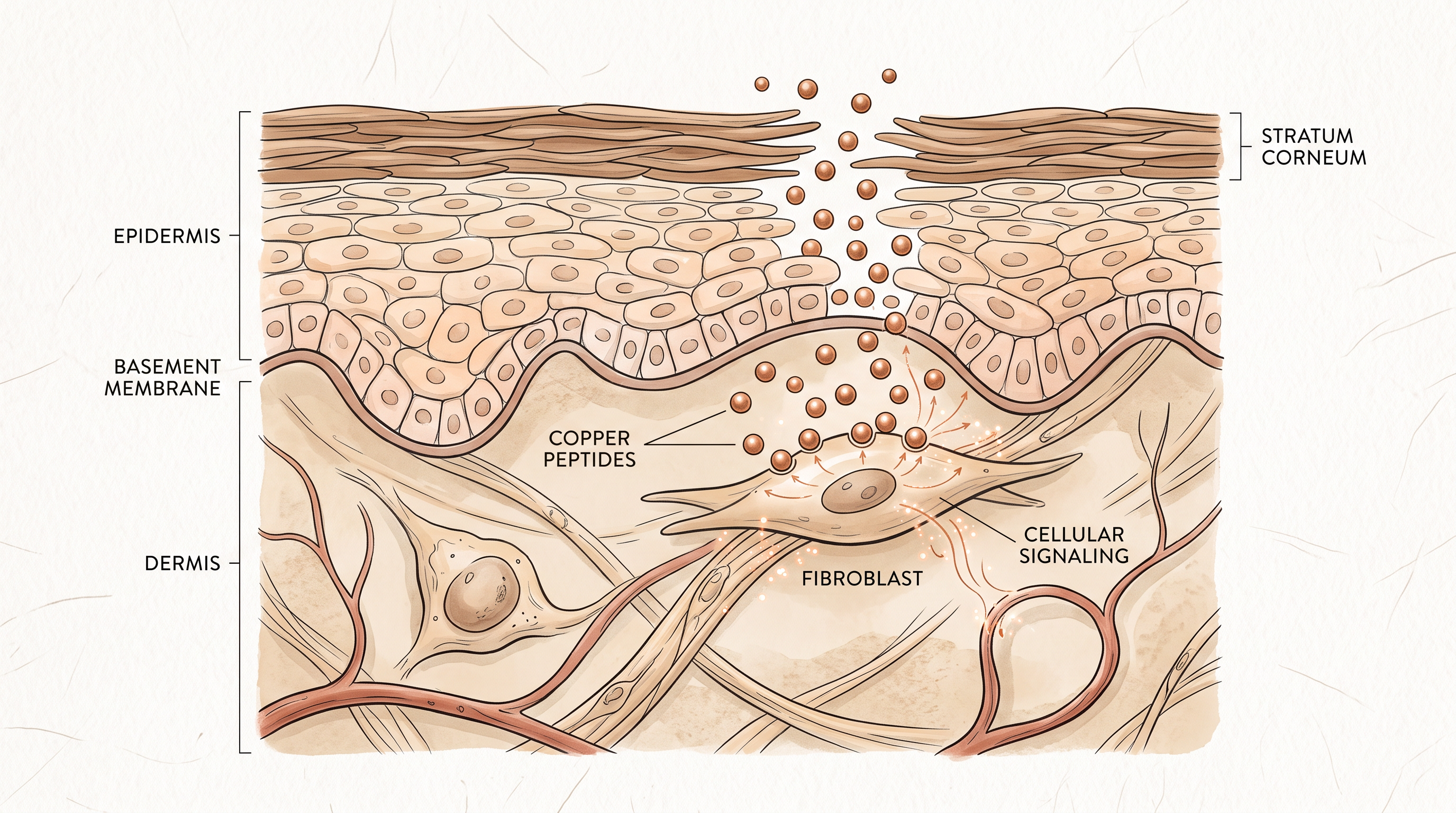
Here’s the part that gets left out: it isn’t trying to penetrate deep the way retinol does. GHK-Cu is designed to work in the upper layers of skin, where fibroblast signaling actually happens, not pushed down past the barrier. A well-formulated serum uses penetration enhancers to help it reach that layer, and applying it to slightly damp skin (right after cleansing, before it fully dries) measurably improves how much gets where it needs to go.
So the honest answer is: no, it’s not designed to penetrate the way an oil-soluble ingredient like retinol does. It doesn’t need to. It was never trying to.
Why most “copper peptide” products aren’t actually GHK-Cu
Here’s the part that took months to sort out: not every “copper peptide” product is actually delivering GHK-Cu. Real, pharmaceutical-grade GHK-Cu costs significantly more to source than the cosmetic-grade substitutes most brands default to. That price gap pushes a lot of brands toward cheaper alternatives, like Copper Palmitoyl Heptapeptide-14, that get labeled “copper peptide” without being the same molecule the research above is actually about.
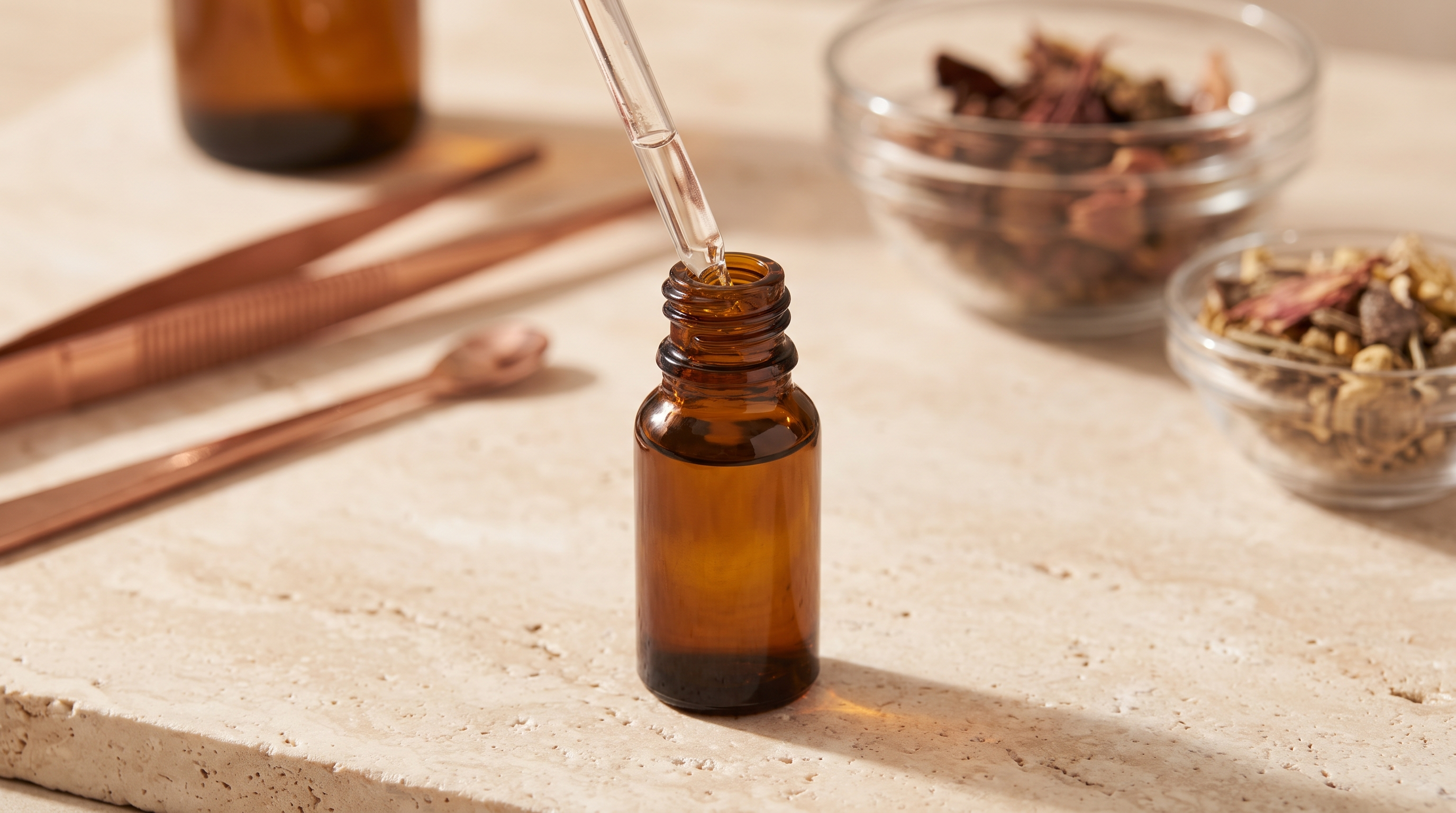
After finding the research, I spent months trying to source a formula that didn’t cut that corner, real GHK-Cu, properly stabilized, at a concentration that actually matched what the published studies used.
What that search became
That search became Revivalix GHK-Cu Serum.
Formulated with real GHK-Cu, not a cheap substitute, at a research-backed concentration. No forced shedding. No stripped barrier. Just your skin’s own repair process, given what it’s been quietly running low on for years.
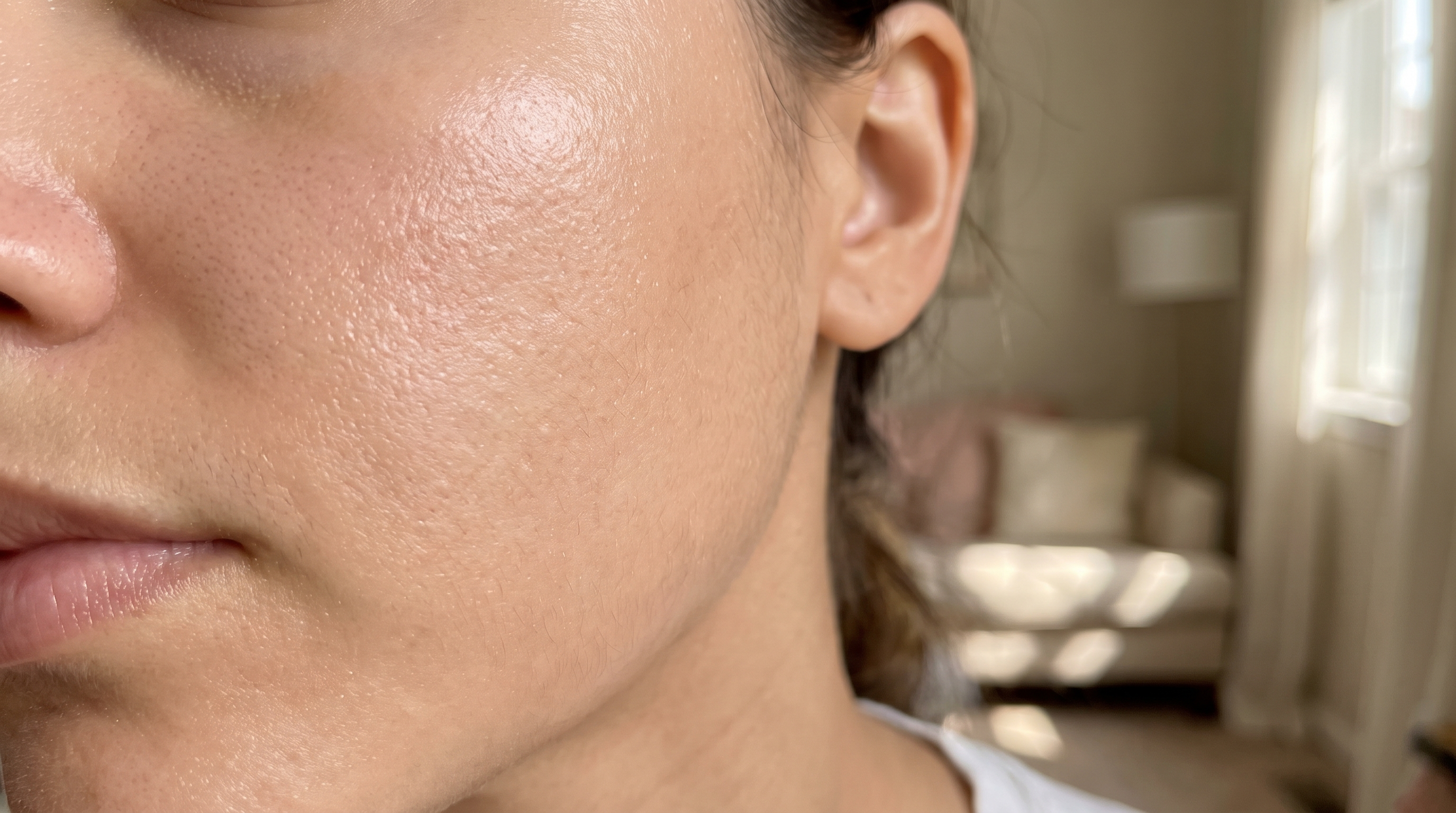
What to actually expect, week by week
Timeline reflects published research on the GHK-Cu ingredient and average, not best-case, outcomes. Individual results vary.
Give your skin the signal, not the fight.
Formulated with real GHK-Cu. No forced shedding, no stripped barrier.
Try Revivalix GHK-Cu SerumSources & research cited on this page
- Skin barrier/microbiome retinol-intolerance study — Frontiers in Microbiology, 2025, PMC12598784
- GHK plasma decline with age (200 ng/mL at 20 → 80 ng/mL at 60) — Pickart, Oxidative Medicine and Cellular Longevity, 2012, PMC3359723